Fixing a Burnt Outlet, Fast
A brown or black mark around a socket, a faceplate gone soft or bubbled, a plug that comes out warm: none of that is cosmetic. It means heat has already built somewhere it never should.
This page covers how that happens, how urgent it really is, and what a proper repair by a licensed Beecroft electrician involves.
Seeing fresh scorching or smelling burning right now? Cut power at the board and phone (02) 9538 7444 immediately.
What Is Going On Behind the Wall
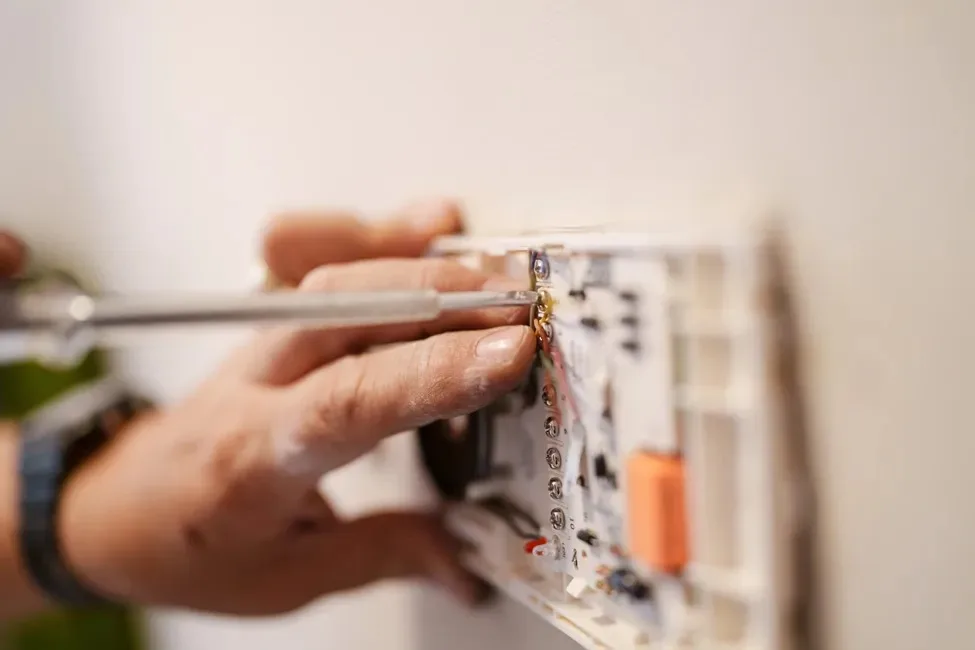
A scorched power point means current has been forcing its way through unwanted resistance, and that resistance has cooked the surrounding plastic long enough to leave a mark. Healthy outlets run for decades without a hint of this.
When it does show, the culprit is nearly always a connection that has loosened, corroded or was never seated properly. The point itself, as a manufactured item, is rarely to blame.
Here is the useful part: the faceplate discolours well before anything can ignite, so the mark is an early warning rather than the opening stage of a fire. Behind the solid double-brick walls common in this suburb's period homes, it is often the only visible clue you will get.
Treat it as a message, not a stain to wipe off.
Is a Burnt Outlet Dangerous?
Yes. Treat visible scorching as urgent regardless of how faint the mark is or how long it has apparently sat there.
Discolouration proves heat has been present, and nothing on the outside tells you whether that heat is still building. Isolate the circuit and call straight away if:
- the point feels warm under your hand
- you can smell anything hot or burnt near it
- the mark is spreading or darkening
An old, stable mark with no warmth and no odour buys you a little time, but it earns an urgent booking rather than a routine one. A failing connection never repairs itself, and every use gives it another chance to heat.
The Most Likely Causes
The list of suspects behind a scorched point is short, and picking the right one is the actual diagnostic job. From most frequent to least:
- A loose terminal screw inside the point, arcing fractionally each time current passes and cooking the plastic around it.
- Too much load through one socket. A heater or kettle stacked with other gear on one adapter pushes the point well past its rating.
- A worn or bent plug pin, making poor contact and creating resistance exactly where plug meets socket.
- Sheer age and heat-cycling, decades of daily use slowly degrading the internal contacts without one identifiable event.
- Moisture or corrosion, mostly in outdoor and semi-exposed positions.
- A fault further back along the run, where the outlet simply happens to be the spot the heat first became visible.
What To Do Right Now
Do these four things before we arrive, and nothing more hands-on than them:
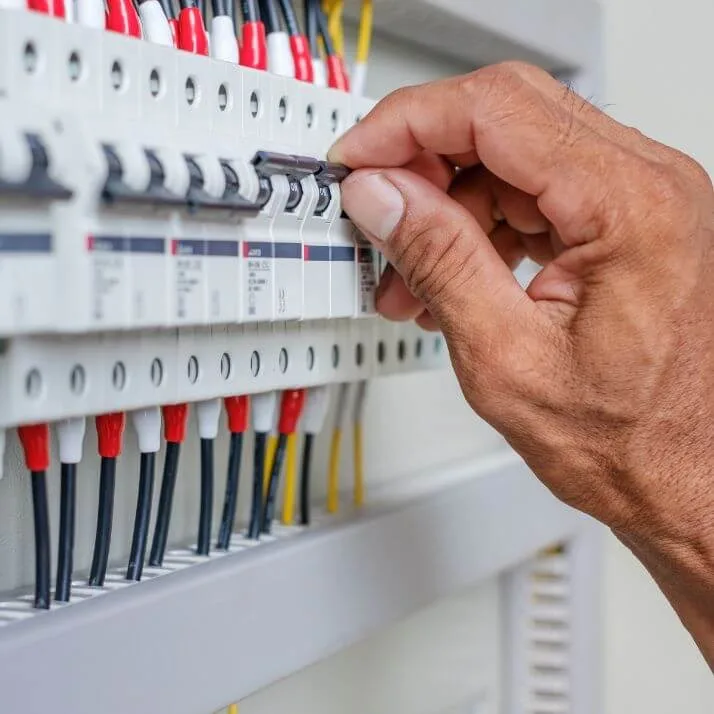
- Kill that circuit from the switchboard, not just the appliance on the wall.
- Keep hands off the outlet while it is discoloured, warm or giving off any odour.
- Set the plugged-in appliance aside so it can be tested separately later.
- Phone (02) 9538 7444 and describe the mark and the smell. That detail tells us how hard to prioritise you.
How We Fix a Burnt Outlet Properly
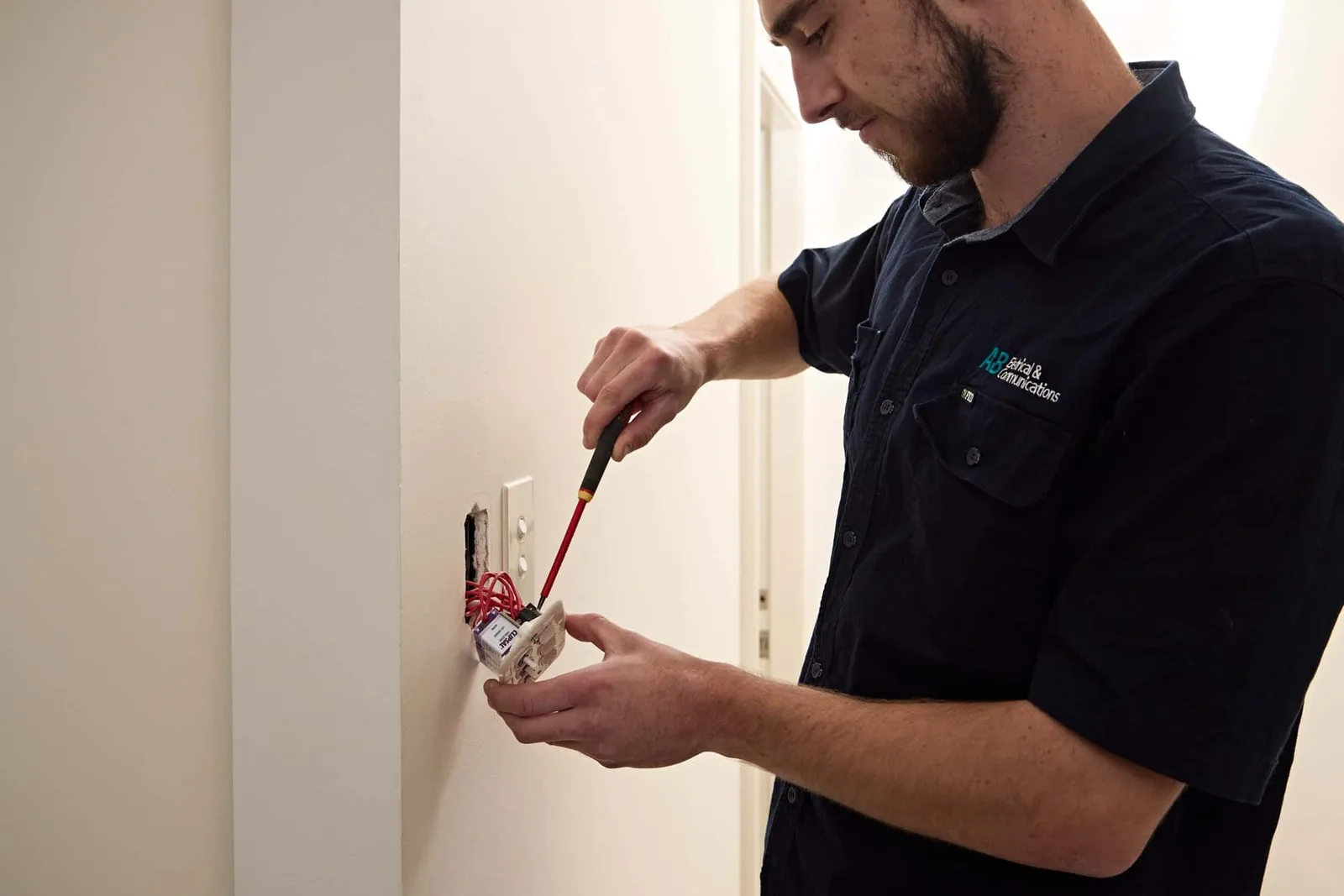
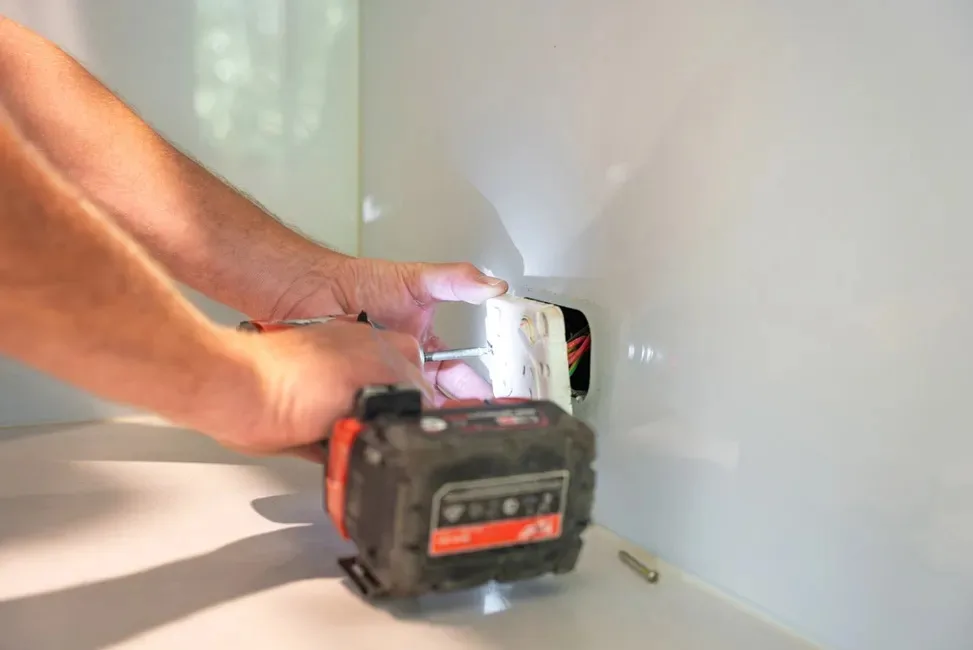
We isolate the circuit, then open the point to learn what actually happened behind the faceplate. There is no assuming it is a simple swap.
The inspection covers the terminal connections, the cable insulation right up to the point, and whether heat has travelled along the run in either direction. The damaged outlet and any affected cable are replaced, and each new connection is torqued and tested before power goes back on.
If the true fault sits further back, we trace it rather than wiring a fresh outlet onto an old problem. Where the circuit itself is elderly or overworked, you hear about that as a separate decision, never smuggled into the quote.
Where the repair is notifiable, a Certificate of Compliance follows: your record of what was found and what was fixed.
The Appliances That Usually Tip It Over
A scorched point almost always had help, and the helpers are predictable. Anything that turns electricity into heat draws serious current: portable heaters, kettles, irons, toasters and clothes dryers head the list.
Chargers, lamps and routers barely register by comparison. A socket can host a dozen of them without strain, then fail within a season once a winter heater joins the party.
The practical rule is simple. One heat-producing appliance per outlet, plugged straight into the wall, never through an adapter that is already busy.
Stopping the Next One
Most scorched outlets grow out of load and connection problems that were entirely preventable, which is good news for every other point in the house. The biggest levers:
- Give hungry appliances their own power point instead of doubling up through adapters.
- Have older, hard-working points inspected during a repair visit while they still look fine on the outside.
- Consider upgrading the switchboard where original circuits now carry far beyond their design load.
- Break the daisy-chain habit, particularly boards feeding boards on aged wiring.
A Local Angle on Burnt Outlets
The suburb's period homes were wired for a kettle and a wireless set, not a kitchen full of simultaneous appliances. Demand has multiplied over a century while many original circuits stayed exactly as laid.
The points at the far end of those long runs are where the strain tends to show first. Around Beecroft Public School and the older streets near it, we regularly meet original outlets still fed from a board that predates every appliance now plugged into it.
Nothing was done wrong. The load crept up decade by decade while the wiring stood still.
Other Faults and Nearby Suburbs
Scorching paired with a switchboard that hums or trips at random points to something wider; see our page on a buzzing switchboard for that pattern. If the smell outweighs the visible mark, start with electrical burning smells instead.
The same repair work runs out to Carlingford, Normanhurst and Thornleigh.

Call Now About Your Burnt Outlet
A scorched point will not fix itself, and it is not a job to sit on. Isolate the circuit, then phone (02) 9538 7444; we can usually assess it often same or next day, and faster when it is an active emergency.
Keep the appliance that was plugged in handy too. Checking it takes minutes and rules half the story in or out.
Common questions
Burnt Outlet FAQs
The questions we hear once the scorch mark has actually been spotted.
Can a burnt outlet actually start a fire?
Yes, and it's one of the more direct paths to one. The scorching you can see is heat that has already built up enough to char plastic, which means the same point can keep heating every time it's used until the fault is removed.
Why does the outlet only get warm when the kettle or heater is running?
Because that's when current draw through the damaged connection is highest. A loose terminal or degraded contact only generates real heat under load, so it can feel fine at rest and still be actively unsafe under a heavy appliance.
Can I just replace the burnt outlet myself?
No. Under NSW law this is licensed electrical work, and a scorched point almost always means the fault sits behind the faceplate too, not just in the visible plastic. Swapping the outlet without finding the cause leaves the underlying problem live.
Will a safety switch stop an outlet from burning?
Not on its own. A safety switch cuts power when current leaks to earth, but it doesn't reliably catch the slow heat buildup from a loose or corroded connection. Both protections matter, they just cover different failure modes.
Does a scorched power point cause problems with insurance?
It can, particularly if a claim later traces back to unlicensed or unrepaired electrical damage. Getting a burnt outlet fixed and certified properly is the straightforward way to make sure that's never a question.
Is it the outlet itself or whatever's plugged into it?
Usually the outlet side, or the wiring behind it. A genuinely faulty appliance tends to trip its own protection or the circuit breaker before it can scorch a point, so visible charring around the faceplate almost always points to the connection, not the plug.