Fixing an Overloaded Power Point, Fast
A single socket buried under a tower of adapters is a familiar sight in Beecroft homes, and it is rarely as harmless as its clutter suggests. Somewhere under that stack, one point may be passing far more current than it was ever rated for.
This page separates the untidy from the unsafe, and shows what the lasting fix from Beecroft's licensed electricians looks like. If a point feels warm right now or you can smell anything odd, stop using it and phone (02) 9538 7444 at once.
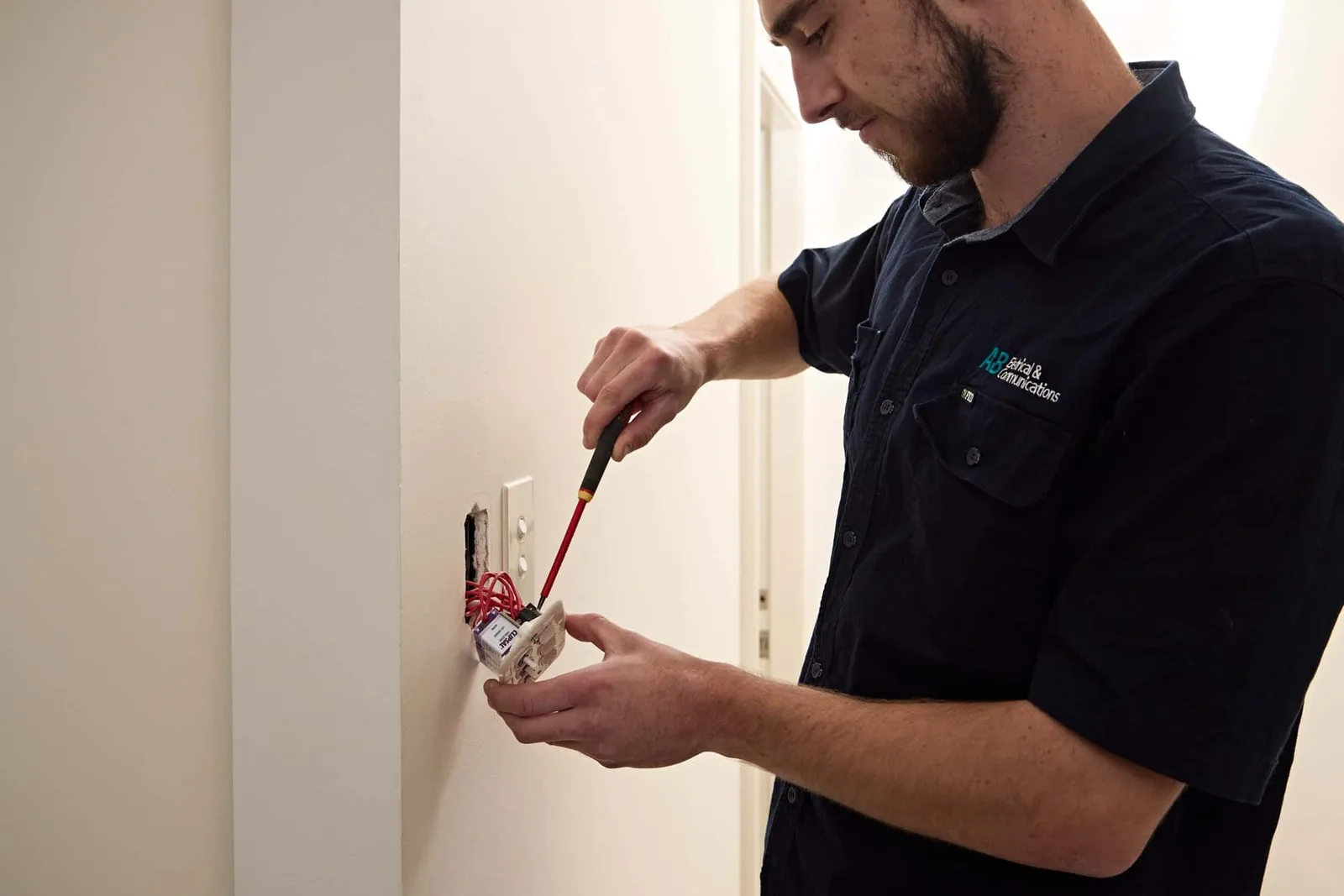
Overloaded Power Points, Explained in Plain English
Every socket, and the circuit feeding it, carries a fixed safe rating. Plugging in more devices never raises that number.
An overloaded point is one asked to supply more total current than the socket, the plug or the wiring behind it can handle. You usually spot it by its costume: a power board riding on another power board, or one double adapter juggling a heater, a lamp and a charger.
What matters is not the count of devices but their combined draw. A handful of phone chargers sips a tiny fraction of what one heater pulls through the same pins.
Two very different situations share the name "overloaded". A socket crowded with low-draw gadgets is mostly a tidiness problem; a socket genuinely passing more current than its rating is a heat and fire problem.
This page exists for the second one.
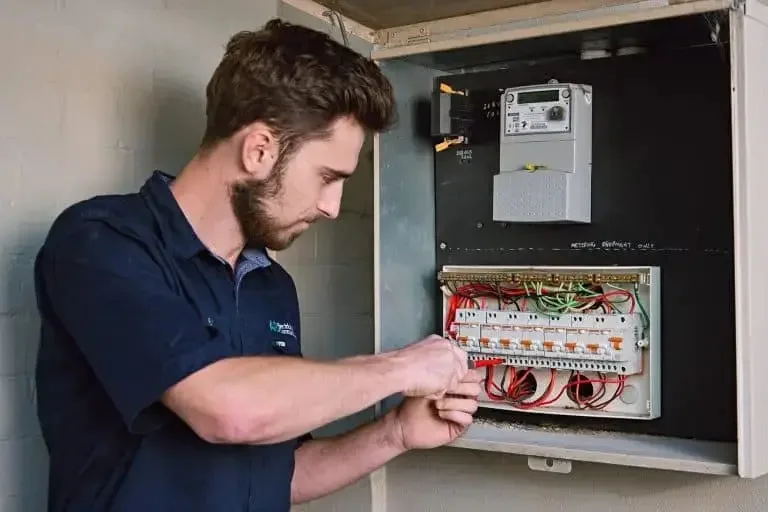
Is an Overloaded Power Point Dangerous?
It can be, and the dividing line is what the point is actually carrying. Several chargers, a router and a lamp add up to very little real risk day to day.
The calculus changes the moment serious current joins the stack. Act quickly when:
- a heater or large kitchen appliance shares the pile
- the point feels warm, or ever trips without an obvious reason
- there is any discolouration or odour at the socket or plug
Notice heat, a smell or a mark? Stop using the point that instant and call us rather than queueing politely for the next opening.
Genuine clutter with no warmth can wait until a planned visit. Book it anyway, because households add devices far faster than they add sockets, and today's manageable stack is next winter's problem.
What Usually Causes It
An overload almost never arrives as one big mistake. It accumulates as a room's demands outgrow the wiring it was born with, and these are the usual ingredients, most common first:
- Too few points for how the room now works, the default in houses planned around a fraction of today's appliances.
- Boards stacked on boards, each new layer hiding the true combined draw a little better.
- Serious current sharing a light-duty socket, a heater or heat-pump load plugged in beside chargers and lamps.
- A study or media setup added long after the wiring, common in this suburb's long-held family homes, without any matching new points.
- One circuit feeding several rooms, so load from across the house converges on a single run.
- Extension leads promoted to permanent infrastructure, instead of bridging a gap for a weekend.
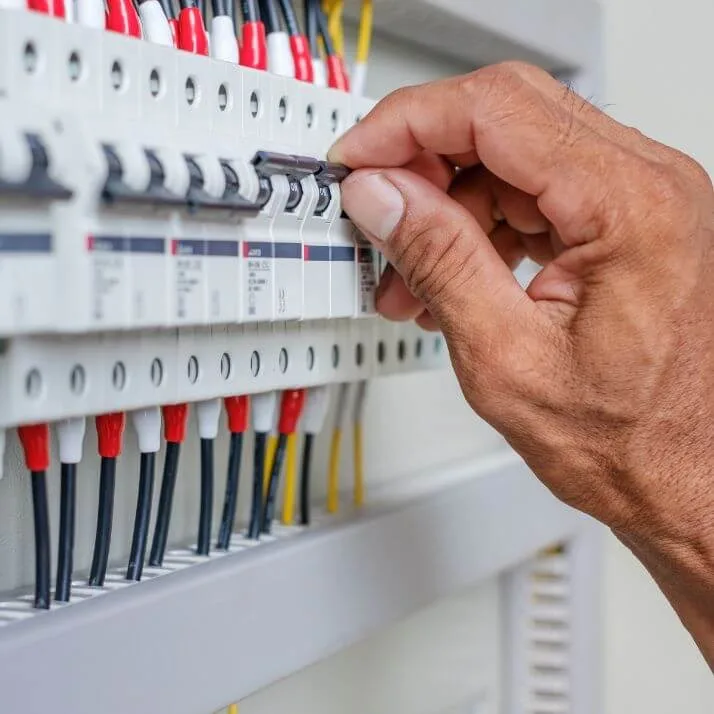
Three Safe Steps To Take Now
You can defuse most of the immediate risk in about two minutes, without tools and without touching the switchboard:
- Pull any high-draw appliance off the crowded point, heaters first, every time.
- Feel the point and each board for warmth. Anything warm stays unplugged until checked.
- Redistribute what remains across other sockets in the room, rather than adding one more adapter to the pile.
How We Fix an Overloaded Power Point
We start with how the room is really used, because the mismatch between its life and its wiring is the actual problem. What gets plugged in on a normal Tuesday matters more than what happens to be there during the visit.
That conversation takes ten minutes and shapes the whole job.
A fix sized only for today's clutter falls short within a year. So we count forward, then check where the existing circuit has genuine headroom.
Where capacity exists, the answer is properly wired points placed where the room needs them, not where a builder guessed decades ago. Where the circuit is already near its ceiling, we price a new circuit or a broader look at the board before loading the old run further.
Every new point is installed and tested to AS/NZS 3000, existing wiring implicated in the problem gets corrected, and notifiable work is certified with a written record of the changes.
The Winter Spike We See Every Year
Overload calls from this part of the ridge cluster tightly around the cold months, and the mechanism is no mystery. Winters up here run noticeably cool, so portable heaters come out of cupboards all over the suburb at once.
A heater is the classic overload trigger. It draws more than almost anything else in the house, it runs for hours at a stretch, and it usually gets plugged into whichever crowded socket sits nearest the couch or the desk.
The bedroom or study that coped fine all summer suddenly is not coping at all. If a point in your place only ever plays up between June and August, load is almost certainly the story.
Preventing the Next Overload
Lasting prevention means adding capacity, never just managing clutter with a fresh adapter. The habits that keep rooms out of trouble:
- Install power points where devices actually live, so boards stop bridging the gap.
- Have switchboard upgrades assessed when several rooms lean on one already-stretched circuit.
- Demote extension leads back to temporary duty, their only proper job.
- Give every heat-producing appliance a socket of its own.
- Re-check a room whenever its purpose changes, since a spare bedroom turned study brings load the original plan never imagined.
Nearby Suburbs and Related Faults
A crowded point that has already left a mark or feels warm has crossed into outlet scorching territory, which that page covers in detail. Where there is a smell without a visible mark, start there instead, and treat it with more urgency than clutter alone deserves.
The same rewiring and new-point work runs through Carlingford, Thornleigh and Normanhurst.

Call Now and Free Up That Power Point
A room that has outgrown its sockets needs wiring, not another adapter. Phone (02) 9538 7444 and we will scope what the space genuinely needs, often same or next day for non-urgent work.
The quote is free, and the adapters can finally retire.
Common questions
Overloaded Power Points FAQs
Common questions from the moment the power board tower finally becomes impossible to ignore.
Will I get a certificate once extra points are installed?
Yes, where the work counts as notifiable electrical work, which new circuits and points generally are. You'll get a Certificate of Compliance confirming it was installed and tested to the wiring rules.
Do old fuses make an overloaded point worse?
In a sense, yes. A ceramic fuse responds more slowly to sustained overload than a modern circuit breaker does, so a point that's been running hot under a heavy load for a while is more likely to have caused damage before anything actually cuts the power.
Is it the power board that's faulty or the point behind it?
Usually neither is faulty in the manufacturing sense, the point simply wasn't designed to carry what's now being asked of it through a stack of adapters. The fix is rarely replacing the board, it's giving the room more properly wired points.
Can I keep using an overloaded point while I wait for a visit?
That depends on what it's carrying. If it's warm, has ever tripped under normal use, or is running a heater or similar high-draw appliance, stop using it and spread the load elsewhere until we've looked. A point carrying several low-draw chargers is lower risk in the meantime.
How do you work out how many extra points a room actually needs?
We look at what's realistically going to be plugged in, not just what's there today, and where the existing circuit has headroom versus where a new circuit makes more sense. It's a practical conversation on site, not a guess.
Why does the point only get warm at certain times of day?
Because load isn't constant, it spikes when several appliances run together, of an evening for example. A point that's fine most of the day but warm during peak use is still a sign the load is close to or past what it's rated for.